

7 Years After the Pandemic: Reflections on Singapores Evolving Workspaces
February 05, 2026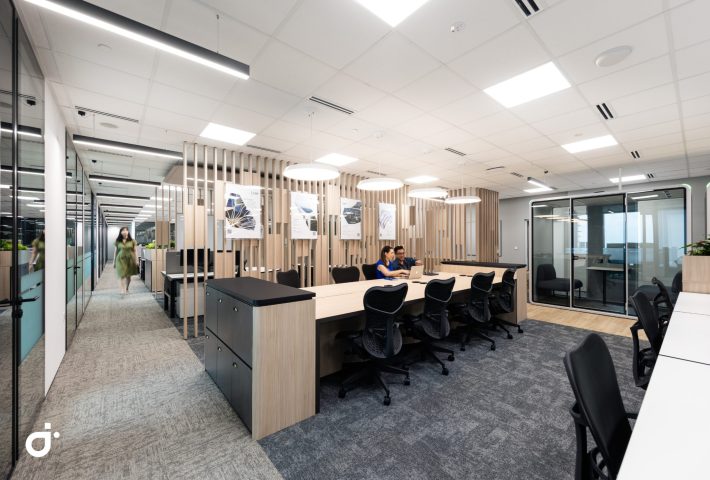
Seven years after the pandemic began, it is clear that COVID 19 did more than disrupt how Singaporeans worked. It fundamentally reshaped expectations around work, workplaces, and the role of the office itself.
What started as an emergency response during the circuit breaker period has since become a long term shift affecting productivity, employee wellbeing, work life balance, and how organisations design and use office environments. The conversation today is no longer about whether hybrid work should exist. It is about how workplaces must evolve physically to support new patterns of work in a post pandemic world.
This reflection looks beyond temporary trends to examine what has genuinely changed in Singapores workspaces and what business leaders should consider as the future of workplace design continues to evolve.
The Broader Context of Workplaces in Singapore and the Asia Pacific Region
After the pandemic started, the transformation of workplaces in Singapore reflects a broader shift occurring across the Asia Pacific region and the wider world. Research across multiple countries shows that work environments have evolved in response to changing expectations around productivity, safety, and employee wellbeing.
In Singapore, government policy, industry regulations, and public health responses during COVID 19 accelerated workplace changes faster than the global average. The circuit breaker period in the second quarter marked a turning point for companies, forcing rapid adoption of remote working and flexible working hours across a large number of sectors.
Across the Asia Pacific region, businesses faced similar pressures, but Singapore’s dense island context amplified the need for efficient space planning and sustainable workplace strategies. This regional comparison highlights why Singapore workplaces have evolved differently from other markets.
When the Pandemic Started The Shock That Forced Change
When COVID 19 reached Singapore in early 2020, workplaces did not gradually adapt. They stopped operating almost overnight.
The circuit breaker in the second quarter forced a large number of employees into remote working arrangements with little preparation. Offices were vacated, homes became workspaces, and digital tools replaced physical interaction almost immediately.
This period exposed long standing assumptions. Many roles did not require constant physical presence. Long commutes contributed little to real productivity. Sitting in an office was often mistaken for meaningful output.
At the same time, vulnerabilities surfaced. Supply chain disruptions affected multiple industries. Mental health challenges intensified as boundaries between work and personal life blurred. Not all employees had access to supportive environments or suitable technology.
Although Singapore adapted faster than many countries in the Asia Pacific region, the experience permanently altered how organisations think about work and space.
Remote Working What It Enabled and Where It Fell Short
Remote working was initially treated as a temporary necessity. Over time, it became a large scale experiment that revealed both strengths and limitations.
For many employees, remote work offered greater autonomy and flexibility. Certain roles experienced improved work life balance and reduced daily stress. Organisations accelerated the adoption of collaboration tools and gained access to wider talent pools.
However, limitations became increasingly evident. Collaboration weakened without shared physical environments. Innovation slowed where spontaneous interaction was critical. Isolation increased, particularly among younger workers. Mental health concerns grew as work and personal life became indistinguishable.
Research across the Asia Pacific region showed that productivity could be maintained in the short term, but engagement declined when remote work lacked structure, connection, and environmental support.
Remote working itself did not fail. The assumption that location alone could replace environment, culture, and human connection did.
Workforce Expectations and the Shift in Employee Priorities
The post pandemic workforce has developed evolving needs that extend beyond location flexibility. Employees increasingly prioritise work life balance, mental health, and long term sustainability over traditional markers of success.
Across industries, employers have recognised that retaining talent requires more than flexible policies. It requires environments that support wellbeing, collaboration, and a sense of community. This shift is particularly evident among younger workers and professionals navigating changing job expectations in a competitive market.
Flexible working hours, hybrid work models, and purpose driven workplaces have become critical tools for companies seeking to retain talent in a workforce shaped by pandemic experiences. Ultimately, workplace design plays a central role in supporting these expectations.
The Hybrid Work Model and Its Impact on Physical Space
As restrictions eased, most Singapore organisations did not return fully to pre pandemic work patterns. Instead, the hybrid work model emerged as the dominant approach, combining remote flexibility with in office collaboration.
Hybrid work was not driven by ideology. It was driven by necessity. Employees valued flexibility. Employers required alignment, collaboration, and culture building. Many roles needed both autonomy and shared space.
Today, hybrid work is an expected baseline across many industries. However, many organisations treated hybrid work as a scheduling change rather than a spatial one. Offices remained unchanged, resulting in underused desks, empty boardrooms, and uncertainty about the purpose of coming into the office.
Hybrid work only functions effectively when physical environments are redesigned to support intentional use rather than habitual attendance.
The Hybrid Work Model in Practice Across Industries
While the hybrid work model is widely adopted, its implementation varies significantly across sectors. Professional services, technology companies, and corporate offices have embraced hybrid models more rapidly than operational or site based industries.
In Singapore, many companies adopted hybrid work arrangements as a default, while others refined their hybrid model over time to balance productivity and collaboration. Hybrid work is no longer a trend, but a normal operating condition shaped by business demand and workforce preferences.
Hybrid work, when poorly supported by space and technology, leads to disengagement. When aligned with thoughtful workplace design, it creates greater flexibility without compromising performance.
What Hybrid Work Really Demands From Office Design
The most significant impact of hybrid work is visible not in policy documents, but in office layouts.
In Singapore, many offices were designed for full occupancy, individual desks, and long periods of sitting. These assumptions no longer reflect how offices are used today.
Desk utilisation has declined, while demand for collaboration areas has increased. Large boardrooms are frequently underused, while smaller discussion spaces are constantly in demand. Employees now come into the office primarily to interact, align, and connect.
As a result, workplaces are shifting away from desk focused planning toward purpose driven environments. Offices are being designed to support collaboration, innovation, and community rather than static presence.
Hybrid work succeeds not because employees split their time, but because spaces are designed around why people choose to come in.
How Post Pandemic Design Features Have Changed the Modern Workplace
Beyond work arrangements, the most visible evolution can be seen in specific design features within the workplace.
Health and hygiene considerations that were once secondary are now embedded into the built environment. Touchless access systems, such as automated sliding doors and sensor based entry points, reduce physical contact in high traffic areas while improving accessibility and circulation flow.
Material selection has also evolved. Anti bacterial paints, treated fabrics, and easy to maintain finishes are increasingly specified for workstations, meeting areas, and shared facilities. These materials support healthier environments while maintaining visual quality and durability.
Surface performance has become a key consideration. Protective laminates and high pressure panel systems are commonly used on tables, wall panels, and joinery to improve resistance to wear and support hygiene standards. These choices reflect a shift toward materials that balance longevity, cleanliness, and design intent.
Post pandemic workplace design is no longer about visible safety measures. It is about integrating health considerations subtly through thoughtful detailing and material strategy.
The Role of Materials, Technology and Safety in Modern Offices
Post pandemic office environments reflect a renewed focus on safety, durability, and long term performance. Advances in materials technology have influenced how surfaces, finishes, and shared spaces are designed and maintained.
Anti bacterial materials, durable laminates, and protective panels support hygiene while reducing maintenance demands. These choices contribute to sustainable development by extending material lifespan and reducing replacement cycles.
In high density workplaces, safety considerations influence layout planning, circulation space, and surface selection. These design decisions support employee wellbeing while aligning with environmental and operational goals.
Rethinking the Office From Space to Purpose
Seven years after COVID 19, the role of the office in Singapore has fundamentally changed.
The office is no longer a default location for daily tasks. It is no longer a place for individual work that can be done remotely. It is no longer a symbol of productivity.
Instead, it has become a space for collaboration, decision making, and cultural alignment. Organisations are creating environments that prioritise interaction over isolation and flexibility over rigidity.
This shift has increased demand for adaptable layouts, modular meeting spaces, informal collaboration zones, and shared community areas. Coworking environments, once associated primarily with startups and the gig economy, are now integrated into broader corporate workspace strategies.
The modern office is defined not by size or prestige, but by how effectively it supports people.
Why Singapores Workspace Evolution Is Different
Singapores workspace evolution cannot simply follow global trends. As a dense island city with high commercial rents and limited space, inefficiency carries a real cost.
Workspace design in Singapore is a strategic decision. High rental costs demand maximum value per square foot. Dense environments amplify the impact of poor layout decisions. Commutes increase expectations that time spent in the office is meaningful.
As a result, many organisations are redesigning existing spaces rather than expanding footprints. The focus is on flexibility, multi functional areas, and environments that justify the commute while supporting collaboration and focus.
This pragmatic approach reflects Singapores broader business mindset, which values outcomes and efficiency over trends that lack measurable impact.
Employee Wellbeing Becomes a Core Design Consideration
One of the most lasting effects of the pandemic is the elevation of employee wellbeing from a secondary concern to a critical priority.
Burnout, disengagement, and stress highlighted the limitations of traditional office environments. Today, wellbeing is directly linked to productivity, retention, and long term workforce sustainability.
Physical environment plays a significant role. Lighting affects energy levels. Acoustics influence concentration. Spatial density impacts stress. Access to quiet areas supports recovery and focus.
Wellbeing is no longer a perk. It is a performance factor shaped by design.
Mental Health Wellbeing and the Physical Work Environment
Mental health has become a critical consideration in workplace planning. The pandemic highlighted how physical environments directly affect stress levels, focus, and overall wellbeing.
Workplaces that lack access to quiet areas, natural light, and appropriate spatial separation contribute to fatigue and disengagement. In contrast, environments designed with wellbeing in mind support healthier work patterns and stronger productivity outcomes.
For many workers, the office now plays a role in restoring balance rather than demanding constant sitting and prolonged screen time. This shift reflects a deeper understanding of how environment influences daily experience and long term performance.
Hot Desking as a Spatial Strategy
Hot desking is often misunderstood as a seating policy. In reality, it is a spatial strategy that must be supported by thoughtful design.
Effective hot desking environments require flexible layouts, adequate storage, and clear zoning. Workstations are complemented by collaboration areas, breakout zones, and focus spaces that allow employees to move between different modes of work.
In post pandemic offices, hot desking is paired with improved circulation planning, better ventilation strategies, and clearer separation between collaborative and quiet areas. When designed properly, it supports flexibility without compromising comfort, productivity, or experience.
Coworking Spaces and the Rise of Flexible Office Models
Coworking spaces have evolved from niche solutions into mainstream workplace strategies. Originally associated with startups and the gig economy, coworking environments now support larger organisations seeking flexibility and scalability.
In Singapore, coworking spaces address fluctuating workforce sizes, project based teams, and evolving space requirements. They offer businesses the ability to adapt without long term commitments while maintaining access to collaborative environments.
The rise of coworking reflects a broader shift toward flexible office models that respond to workforce mobility and changing job structures across sectors.
Productivity Redefined Through Environment
Concerns that flexibility would reduce productivity have largely been disproven. Productivity has not declined. It has changed.
Organisations now measure outcomes rather than hours. Asynchronous collaboration is common. Contribution matters more than visibility.
However, productivity gains depend heavily on environment. Flexibility without structure leads to disengagement. Design provides the structure that allows flexibility to work.
What Research Reveals About the Future of Workplaces
Research into post pandemic workplace trends indicates that office environments will continue to evolve in response to technological advancement, workforce expectations, and business priorities.
Studies across Asia and the Asia Pacific region show that organisations prioritising adaptable spaces and employee wellbeing outperform those clinging to rigid models. The future workplace is shaped by integration between policy, technology, and physical design.
Ultimately, the success of future workplaces depends on how well organisations align environment, culture, and purpose.
What This Means for Business Leaders
For business leaders, workspace decisions are no longer operational details. They directly influence productivity, talent retention, and organisational resilience.
The critical question today is not whether hybrid work should exist, but whether workplaces are intentionally designed to support it. Offices treated purely as costs often remain underutilised. Offices designed as strategic assets support collaboration, wellbeing, and growth.
The future of work is shaped not only by policy, but by the spaces organisations create.
Final Reflection Designing the Next Phase of Work
Seven years after the pandemic, Singapores workplaces are more flexible, more human, and more complex than ever before.
The organisations that thrive will not be those with the most permissive policies, but those that intentionally design environments aligned with how people actually work today.
In this next phase of workplace evolution, office design is no longer about aesthetics.
It is about strategy.
Rethinking how your workplace supports health, flexibility, and long term performance
Explore how intentional workspace design comes to life through real projects

