

Focus Spaces vs Collaborative Zones: Balancing Office Design and Productivity
April 01, 2026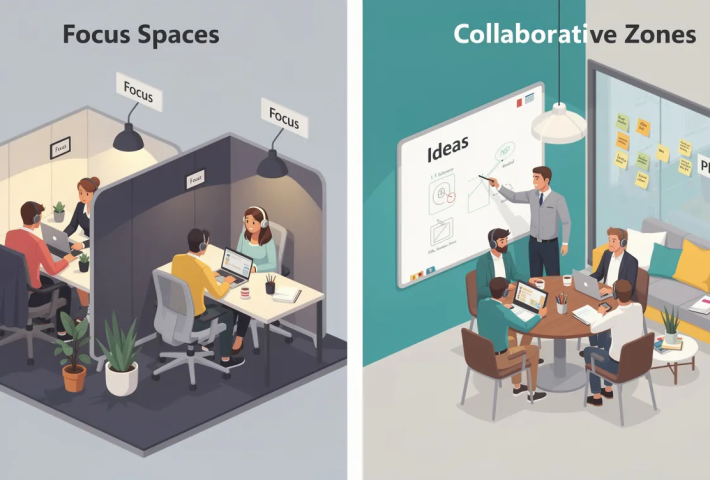
Modern businesses are rethinking how office space should be designed. The traditional office layout filled with rows of desks is no longer effective for supporting different work styles.
Employees today perform many types of work throughout the day. Some tasks require deep concentration and focused work. Other tasks require teamwork, discussion, and collaborative efforts.
This shift has forced companies to rethink how they design their workplace environments. The goal is no longer just to fit as many desks as possible into a commercial space.
The goal is to create a balanced office environment that supports collaboration and focus while also improving employee satisfaction and employee well being.
Understanding the difference between focus spaces and collaborative zones is essential for designing a well designed office that supports both productivity and company culture.
For organizations planning an office fit out or workplace redesign, achieving the right balance between private and collaborative spaces is one of the most important design decisions.
Understanding Focus Spaces in Office Design
Focus spaces are areas within the office designed specifically for deep concentration and focused work.
These spaces allow employees to work without constant interruptions from conversations, meetings, or surrounding activity.
In open plan offices, distractions are one of the most common complaints among employees. Noise from nearby conversations, phone calls, or collaborative discussions can make it difficult to complete tasks that require concentration.
Focus spaces help solve this problem by providing quieter environments where employees can concentrate on complex work.
Examples of focus spaces include private offices, quiet zones, phone booths, and smaller but focused space areas designed for individual tasks.
These areas are often designed with sound absorbing materials, comfortable seating, and thoughtful lighting that supports long periods of concentration.
When focus spaces are designed correctly, they help employees maintain productivity while also supporting mental health and employee well being.
The Role of Collaborative Zones in Modern Office Design
While focus spaces are essential for individual work, collaborative spaces play an equally important role in workplace design.
Collaboration is a critical part of how modern businesses operate. Teams must regularly share ideas, brainstorm solutions, and coordinate projects.
Collaborative zones are designed to encourage interaction and workplace collaboration. These spaces allow employees to work together in a more relaxed and flexible environment.
Common examples of collaborative spaces include meeting rooms, collaborative areas, lounge style seating zones, and workshop like maker space environments where teams can develop ideas together.
Some offices even include unconventional spaces that encourage spontaneous conversations, such as cozy living room style seating areas or thoughtfully positioned communal areas.
These collaborative zones support creativity and communication while strengthening company culture.
Why Modern Offices Must Balance Collaboration and Focus
Designing a modern office requires balancing collaboration and focus rather than prioritizing one over the other.
In many open plan offices, companies focused too heavily on collaboration and removed too many private spaces.
While open layouts can encourage interaction, they can also reduce productivity if employees have no place to concentrate.
A balanced office design includes both collaborative and focus workspaces so employees can choose the environment that best supports their current task.
Providing diverse workspaces allows employees to move between quiet zones and collaborative areas depending on their work needs.
This flexibility supports different personality types, work styles, and job functions within the organization.
When employees have access to both private and collaborative spaces, they are more likely to remain engaged and productive throughout the workday.
Key Design Elements That Support Focus Workspaces
Creating effective focus spaces requires careful attention to several key design elements.
Acoustic control is one of the most important factors. Sound absorbing materials such as acoustic panels, soft surfaces, and enclosed rooms help reduce noise distractions.
Lighting also plays an important role in focus workspaces. Proper lighting reduces eye strain and supports long periods of concentration.
Furniture selection is another important consideration. Ergonomic seating and properly sized workstations help employees maintain comfort while performing focused work.
Technology integration also supports focused work. Reliable internet connectivity, video conferencing tools, and private meeting rooms allow employees to complete tasks efficiently without leaving the workspace.
When these elements are combined, focus spaces become an essential component of a balanced office environment.
Designing Collaborative Areas That Encourage Interaction
Collaborative zones require a different design approach compared to focus spaces.
These areas should feel open, inviting, and flexible. The goal is to encourage collaboration without making the space feel overly structured.
Comfortable seating arrangements, movable furniture, and open layouts can help create an environment that encourages teamwork and communication.
Meeting rooms remain important for formal discussions, but many companies now include additional collaboration spaces designed for informal interaction.
Thoughtfully positioned communal areas can encourage spontaneous conversations that often lead to innovative solutions.
These spaces help teams share ideas quickly and strengthen workplace collaboration across departments.
Creating Diverse Workspaces for Different Work Styles
Modern workplaces must support a wide range of work styles.
Some employees perform their best work in quiet environments. Others thrive in collaborative settings where they can exchange ideas with colleagues.
Providing diverse workspaces ensures that employees can choose the setting that best supports their current task.
A well designed office typically includes a combination of private offices, quiet zones, collaborative areas, meeting rooms, and unconventional spaces.
Some companies also create smaller focus workspaces for short periods of deep work, while maintaining larger collaborative areas for team discussions.
This variety of workspace options helps employees remain productive while supporting individual growth and workplace collaboration.
How Hybrid Work Is Changing Office Design
Hybrid work has dramatically changed how companies design office spaces.
Employees now divide their time between remote work and in office collaboration. As a result, offices must support both individual focus work and group interaction.
Hybrid office environments require thoughtful planning to ensure that both remote collaboration and in person teamwork can happen effectively.
Technology integration plays a major role in hybrid office design. Video conferencing tools, digital collaboration platforms, and shared meeting rooms must be integrated into the office environment.
At the same time, offices must continue to provide focus spaces where employees can complete individual tasks without distractions.
Balancing these requirements requires a carefully planned office layout that supports both collaboration and focus.
Supporting Employee Well Being Through Workspace Design
Workspace design has a direct impact on employee well being and mental health.
Employees who work in environments with constant noise and interruptions may experience increased stress and reduced productivity.
Providing focus spaces allows employees to step away from busy collaborative areas when they need to concentrate.
At the same time, collaborative zones help employees stay connected with colleagues and maintain a sense of belonging within the company.
A thoughtfully designed office supports employee satisfaction by providing the right balance between privacy and interaction.
When employees feel valued and supported by their work environment, organizations often see improvements in engagement and overall business success.
Innovative Office Design Solutions for Modern Businesses
Modern office design continues to evolve as companies explore innovative solutions for balancing collaboration and focus.
Some offices now include workshop like maker space areas where teams can experiment with ideas.
Others incorporate unconventional spaces designed for creative thinking and informal collaboration.
Phone booths, quiet pods, and enclosed focus workspaces are also becoming common in modern office environments.
These solutions allow companies to maximize space efficiency while supporting diverse work styles.
A thoughtfully designed office incorporates these elements in a way that feels natural and supports the daily workflow of employees.
Creating a Balanced Office Environment That Drives Productivity
The most successful office environments are those that achieve the right balance between collaborative spaces and focus spaces.
Employees need the flexibility to choose where they work depending on the task they are performing.
Some activities require deep concentration and quiet environments. Others benefit from teamwork and open discussion.
By designing offices that include both collaborative and focus workspaces, organizations create an adaptive and supportive setting for employees.
This balanced office design enhances productivity, supports employee well being, and strengthens company culture.
For modern businesses, workspace design is no longer just about aesthetics. It is about creating environments that drive business success while supporting the people who work within them.
Designing Workspaces That Support the Future of Work
As workplace expectations continue to evolve, office design must adapt to support new ways of working.
Hybrid work models, remote collaboration, and flexible work schedules are becoming standard across many industries.
Companies that invest in thoughtfully designed office environments will be better positioned to support these changes.
By artfully integrating private and collaborative spaces, organizations can create workplaces that support productivity, creativity, and long term growth.
A well designed office is ultimately an investment in people, culture, and the future success of the business.
Start Rethinking Your Workplace Strategy
Designing an office that balances focus spaces and collaborative zones requires careful planning and a deep understanding of how employees work.
At IDI Singapore, our team helps businesses create thoughtfully designed office environments that support productivity, collaboration, and employee well being.
If your organization is planning to redesign its office layout or transform an existing space into a modern workplace, our experts can guide you through the entire process.
Explore how a balanced workspace design can support your organization’s next stage of growth.

