

Hybrid Work Reality Check: What Office Design Still Works In 2026 And What Does Not?
March 26, 2026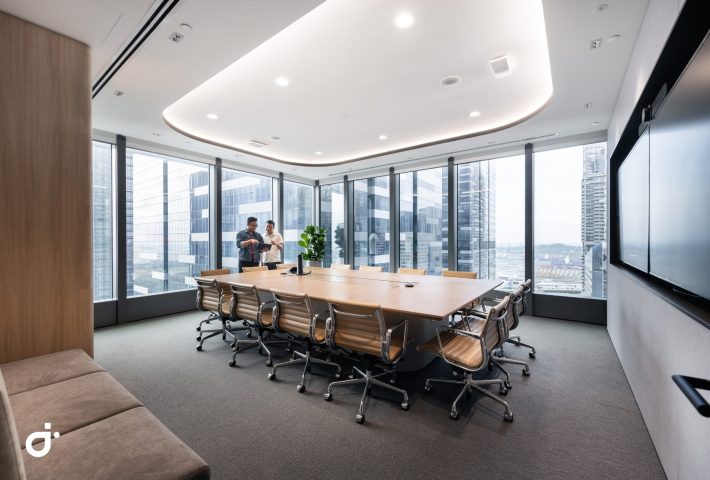
The conversation around hybrid work is no longer theoretical. The experimentation phase is over. By 2026 most organizations have enough utilization data, occupancy metrics, and employee feedback to see what actually works inside the workplace and what has quietly failed.
Many companies assumed hybrid work was about allowing remote work while keeping the same office. That assumption created underused space, confused teams, and offices that no longer support productivity. The new era demands intentional workplace design that reflects real work patterns, not legacy layouts.
This is the shift organizations must understand. The office is no longer a default location. It is a strategic environment designed for specific human outcomes.
The Purpose Of The Office Has Changed Completely
Before hybrid work the office was where all work happened by default. Focus tasks, meetings, coordination, and collaboration took place in the same physical environment because there was no alternative.
Today employees already possess functional remote work setups supported by reliable technology and virtual meetings. When they come into the office, they are making a deliberate choice rather than following a requirement.
Behavioral research across many organizations reveals a consistent pattern. Individual tasks that require concentration are often completed more efficiently remotely. Employees report greater control, fewer interruptions, and better focus outside the traditional office.
However, the same organizations see a significant increase in office usage when teams need to align, solve problems, or build trust. These activities depend on presence, shared context, and real time interaction within the built environment.
This is where early hybrid work models failed. Companies attempted to bring employees back into offices still designed for quiet individual productivity. Rows of desks do not create collaboration. They simply place people next to each other while they work alone.
When workplace strategists analyzed space utilization, they discovered that employees come into the office for specific types of work that benefit from immediacy and human interaction. The value of the office is no longer tied to attendance. It is tied to what the environment enables.
Employees consistently choose to be in office when work requires shared energy, immediate feedback, and real time interaction:
- In person collaboration where teams can sketch ideas, debate direction, and iterate in real time
- Strengthening team dynamics through informal conversation and shared experience
- Social connection that reinforces belonging and company culture
- Collective problem solving that moves faster when people can respond instantly rather than through digital delays
These behavioral shifts explain why collaboration spaces outperform assigned desks across most organizations.
Understanding this change is critical because it leads directly to how offices must now be designed.What Still Works In Modern Workplace Design
Designing For Activity Instead Of Attendance
The modern workplace must support activities rather than accommodate headcount. Effective hybrid office design begins by identifying the types of interactions that cannot be replicated remotely and creating environments that make those interactions easier and more productive.
This requires moving away from static layouts toward agile workspace design that supports different work modes throughout the day.
Creating Spaces That Support The Full Spectrum Of Work Styles
Hybrid work revealed something many organizations ignored for years. Employees do not work the same way throughout the day.
Some tasks require deep focus. Others require group discussion. Others require quiet preparation before collaboration.
Modern workplaces must include quiet spaces that allow concentration without interruption. Phone booths and enclosed meeting pods show a significant increase in usage because they restore control over attention.
Flexible furniture also performs better than fixed layouts because it allows teams to reconfigure space depending on activity. A productive work environment must adapt to diverse work styles rather than forcing behavior into a single format.
Organizations that invest in creating environments with spatial variety consistently report stronger employee experience outcomes.
Meeting Spaces Designed For Hybrid Collaboration Not Physical Presence
One of the biggest failures in early hybrid workplace adaptation was the traditional meeting room.
Most meeting spaces were designed for people sitting around a table while remote participants struggled to engage through a screen. This created unequal participation and reduced decision quality.
Effective hybrid office design now treats remote participants as equal users of the space. A smarter workspace layout ensures integrated technology supports clear audio, direct sightlines, and seamless virtual meetings.
Video calls are no longer temporary tools. They are embedded into the daily collaboration model. Meeting rooms must function as hybrid collaboration studios rather than conference rooms.
Natural Light And Environmental Quality Drive Productivity More Than Design Trends
The data is clear. Natural light, airflow, and spatial openness influence energy levels, focus, and overall workplace satisfaction, and they are central to future office design trends for 2025.
Employees will travel to environments that feel healthier and more stimulating than their home office. They will resist environments that feel dense or artificial.
Modern office design must recognize biological responses to space, including the psychology of colours in workspace design. Workplace design is no longer only about aesthetics. It is about supporting human performance.
Data Driven Insights Now Shape The Workplace Instead Of Assumptions
Many organizations discovered through occupancy rates and space utilization tracking that only certain areas of the office were consistently used.
Collaboration zones filled quickly. Assigned desks remained empty. Informal meeting spaces supported more activity than formal boardrooms.
This shift has forced companies to rethink their real estate portfolio using data driven insights rather than static planning models.
The workplace must evolve continuously as work patterns change.
What Does Not Work Anymore
Open Plan Offices Without Acoustic Control
The idea that removing walls would increase collaboration proved flawed. Instead it created distraction and forced employees to seek alternative locations for focused work.
Open environments without quiet infrastructure undermine both productivity and employee satisfaction. Focus requires control over noise and visual interruption.
Creating spaces without acoustic consideration is now one of the most common design mistakes organizations are correcting.
Designing Offices To Measure Attendance Instead Of Outcomes
Some companies attempted to bring employees back in office by enforcing schedules rather than improving the office experience.
This approach resulted in individuals commuting only to sit on virtual meetings all day. The environment did not add value, so engagement declined.
Workplace design must support outcomes rather than presence. The office is successful only when it enables something that cannot happen remotely.
One Size Hybrid Work Models Across All Teams
Different teams require different rhythms of interaction. Creative collaboration requires more shared time. Analytical functions may require extended focus periods.
Many organizations failed by applying identical hybrid work models across departments. Effective workplace strategy recognizes that flexibility must align with function.
Balance flexibility does not mean lack of structure. It means aligning environments with the nature of work being performed.
Reducing Space Without Redesigning The Experience
Some companies downsized physical office space without redesigning how that space would be used. The result was overcrowded collaboration areas and poor spatial flow.
Space reduction must be paired with intentional design. Less space only works when it performs better.
How Organizations Should Measure Workplace Effectiveness In 2026
Measuring workplace effectiveness in 2026 is no longer about counting how many employees show up. It is about understanding whether the built environment supports real work patterns within a hybrid workplace.
Organizations must move beyond perception and evaluate performance using data driven insights that influence design decisions.
Space Utilization
Space utilization measures how frequently specific zones are used relative to their capacity. It reveals whether meeting spaces, quiet areas, and collaboration zones align with actual behavior.
If collaboration areas operate at high utilization while assigned desks remain underused, the issue is not attendance. It is layout strategy. This insight should trigger reallocation of square footage within the real estate portfolio.
Occupancy Metrics
Occupancy rates identify predictable patterns across days and teams. Many organizations observe mid week peaks and early week lows. These predictable patterns inform how much flexible space is required and whether fixed seating makes sense.
The goal is not maximum occupancy. The goal is optimized space that supports teams when they need to gather.
Employee Experience Data
Employee experience feedback reveals whether environments support productivity, comfort, and focus. If employees consistently report leaving the office to complete deep work remotely, the workplace design is misaligned.
This feedback must inform acoustic planning, quiet space allocation, and environmental quality improvements.
Collaboration Intensity
Collaboration frequency and duration indicate whether meeting spaces enable meaningful interaction or simply host routine status updates.
If teams default to virtual meetings even while in office, the physical workplace is not providing additional value.
These insights allow organizations to refine environments continuously rather than treating workplace design as a one time project.
The Role Of Technology In The Hybrid Workplace
Technology is no longer something organizations install after completing an office. It now shapes the workplace from the beginning of the design process.
Hybrid work requires environments that allow employees to move between remote work and in office collaboration without friction. This shift has fundamentally changed how meeting spaces, infrastructure, and spatial layouts must be planned.
Traditional conference rooms were designed for people physically present, with screens added as an afterthought. In a hybrid workplace, remote participants are not secondary. They are equal contributors. This means sightlines, acoustics, camera placement, and screen visibility must be considered as part of the built environment.
Meeting spaces must now function as hybrid collaboration settings where digital interaction feels natural rather than forced.
Infrastructure must also support mobility. Employees move between zones, devices, and collaboration formats throughout the day. Reliable connectivity, integrated scheduling systems, and seamless transitions between virtual meetings and in person discussion are essential to maintaining productivity.
The workplace therefore operates as a connected system of physical space and digital capability. Organizations that align technology with workplace design create environments that support collaboration regardless of where individuals are located.
Those that treat technology as an afterthought continue to experience fragmented communication and underused office space.
Supporting Company Culture Through Spatial Design
In a hybrid workplace, culture is no longer reinforced by daily visibility. Employees are not absorbing company values simply by sitting near each other. Culture must now be supported intentionally through spatial experiences that bring people together with purpose.
Workplace design must create environments where informal interaction can occur naturally. Shared project areas, social hubs, and small collaboration zones allow mentorship, quick discussions, and unplanned exchanges that rarely happen during scheduled virtual meetings, strengthening community and connection in the workplace.
These moments rebuild trust and alignment across teams who may only meet in person a few times each week. Without these spatial opportunities, culture becomes fragmented across remote participants and disconnected work patterns.
Designing for social connection is therefore not an aesthetic decision. It is an operational requirement for maintaining organizational identity.
The Future Of Office Design Is Continuous Adaptation
The future workplace cannot rely on a fixed layout planned years in advance. Hybrid work introduced variability into how and when employees use space, which means environments must now adapt continuously.
Organizations must design flexible zones that can support different functions over time rather than dedicating space to a single purpose, aligning with emerging office design and space trends for 2025. Reconfigurable layouts, modular furniture, and ongoing evaluation of utilization data allow workplaces to evolve alongside changing team dynamics, much like case studies that showcase constant innovation in design elements.
This shift moves workplace strategy away from static planning toward responsive management of the built environment.
Adaptability is not about predicting trends. It is about ensuring the workplace can respond when those trends inevitably change.
The Real Hybrid Work Reality Check
Hybrid work did not remove the need for offices. It revealed whether those offices were ever aligned with how people actually work.
Organizations that treat workplace design as a dynamic system continue to refine productivity, collaboration, and employee experience using measurable insights. Those that maintain legacy assumptions struggle with underused space, inconsistent occupancy rates, and disengaged teams.
The workplace in 2026 is no longer defined by desks or attendance. It is defined by how effectively environments connect people, technology, and collaboration into a cohesive experience.
This is the shift organizations must design for if they want their workplaces to remain relevant in the new era of work.

