

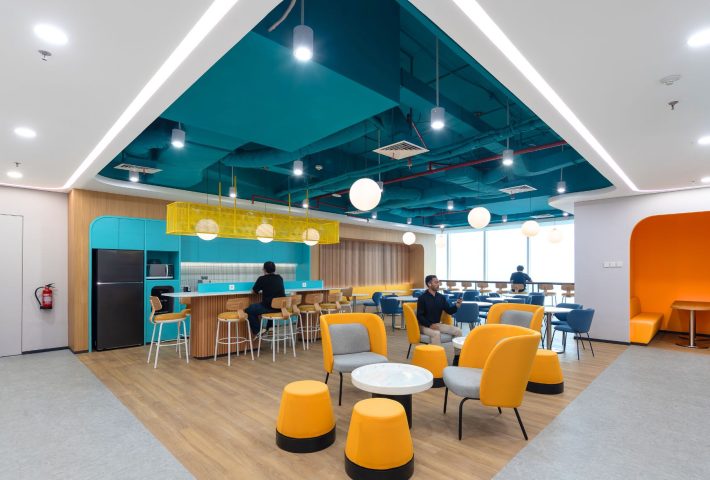
Starting a new job is one of the most memorable experiences in an employee’s career. The first day is filled with excitement, curiosity, and sometimes uncertainty. During this period, every interaction shapes how a new hire views the company, from meeting colleagues to understanding the onboarding process. Office design is a key part of that first impression.
Many organizations invest heavily in recruitment, training, and employee handbooks but underestimate how much the physical workplace influences employee engagement. In fact, 90% of UK employees feel disengaged at work, and companies with high employee engagement are 21% more profitable. Before a new team member completes their first task or attends their first training session, they have already formed opinions about the business based on the office environment around them. Office design shapes those early opinions and should be treated as part of engagement from the start.
This is exactly why office design matters. It creates confidence, encourages communication, supports wellbeing, and helps employees feel welcomed from the very beginning. When designed intentionally, the workplace becomes a powerful tool for creating a positive employee experience that contributes to long-term success.
At IDI Singapore, we believe workplace design should do more than look attractive. It should support people, strengthen company culture, and help businesses build an engaged workforce from day one.
Why the First Day Matters More Than Many Businesses Realize
The first week often determines how quickly a new hire adapts to their role. During this period, employees absorb information rapidly while trying to understand company expectations, workplace behavior, and team dynamics.
If the office feels confusing, uncomfortable, or disconnected, new employees may experience information overload. Instead of focusing on learning and building relationships, they spend unnecessary energy trying to adapt to an environment that does not support them.
A welcoming workplace creates a very different experience. For example, businesses with engaged employees achieve 59% less staff turnover, and structured onboarding increases retention by 58% after three years. Employees immediately develop a sense of belonging, and the space supports both collaboration and focused work. This balance reduces uncertainty and encourages confidence during the onboarding process.
Employee engagement is important because engaged employees contribute more effectively, communicate openly, and develop stronger relationships with colleagues much earlier in their employment.
Why Office Design Matters Before Work Even Begins
Many companies believe employee engagement begins during orientation or training sessions. In reality, engagement starts the moment someone walks through the office entrance, because the workplace itself immediately shapes their experience.
The reception area, meeting rooms, workstations, lighting, and overall workplace design immediately communicate what the organization values.
A thoughtfully designed office tells new hires that the company values professionalism, employee wellbeing, and collaboration. It demonstrates that management has invested in creating environments where employees can succeed.
On the other hand, an outdated office that has been left unchanged may unintentionally communicate that employee comfort is not a priority. In fact, 30% of employees feel their office is outdated and drab, which can negatively impact engagement and retention. While this may not reflect the company’s actual culture, first impressions are difficult to reverse.
Office design therefore becomes part of the onboarding process itself, helping new employees understand the organization before conversations even begin.
The Connection Between Office Design and Company Culture
Company culture extends far beyond mission statements or values displayed on office walls. Employees experience culture through their daily interactions with the workplace.
An office that encourages communication, teamwork, and flexibility reinforces a culture of collaboration. Quiet areas demonstrate respect for focused work. Comfortable breakout areas encourage casual conversations that strengthen human connection across departments.
These design choices allow employees to experience company values rather than simply reading about them in an employee handbook, which helps strengthen engagement.
When employees feel valued through the environment around them, they are more likely to become engaged contributors who actively participate in company initiatives.
Creating a Positive Employee Experience From Day One
A positive employee experience begins when employees feel welcomed, supported, and respected.
Several workplace design elements contribute to this experience, including:
- Comfortable workstations (office plants can boost creativity by 45% and productivity by 38%)
- Clear office layouts
- Easy navigation throughout the office
- Spaces that encourage collaboration
- Quiet areas for concentration
- Access to natural light
- Comfortable meeting spaces (48% of candidates say interview room design impacts job acceptance, and 69% of healthcare candidates value this highly)
- Convenient breakout areas
These features reduce unnecessary stress and help new employees settle into their responsibilities much faster, making the office easier to navigate from the start. High-quality office design can also reduce absenteeism by 41%.
Instead of worrying about where to work or how to navigate the office, employees can focus on learning, connecting with colleagues, and contributing to the business.
The Psychology Behind Workplace Design
People naturally respond to their surroundings. Environmental psychology has consistently shown that physical spaces influence emotions, motivation, creativity, and productivity.
A bright office with natural light creates a different emotional response compared with a dark workplace filled with enclosed spaces and poor ventilation.
Similarly, adjustable desks and ergonomic furniture communicate that employee health matters. Employees who feel physically comfortable are more likely to remain focused throughout the day.
These seemingly simple design decisions collectively influence job satisfaction, employee wellbeing, and overall employee performance, showing how the workplace shapes daily experience. A noisy work environment, for example, can lead to worsened mental health, and workplace distractions cost 1.3 hours per day per employee.
Natural Light Improves Employee Wellbeing
Natural light remains one of the most valuable workplace design investments.
Employees working in well-lit offices often report higher energy levels, improved concentration, and better mood throughout the working day.
Exposure to daylight also supports mental health by helping regulate natural sleep cycles, reducing fatigue, and improving alertness.
For new hires adapting to unfamiliar routines, natural light creates a more welcoming environment while helping reduce stress during the transition period.
Where possible, office layouts should maximize access to daylight while ensuring glare is properly managed.
Air Quality Supports Better Performance
Air quality is another critical factor that directly influences workplace performance.
Poor ventilation can contribute to fatigue, headaches, and reduced concentration. These problems become even more noticeable for employees who are already processing large amounts of new information during onboarding.
Improved ventilation, appropriate humidity levels, and cleaner indoor air support employee wellbeing while helping employees remain productive throughout the day.
Many businesses focus on visual design while overlooking indoor environmental quality. In reality, both are equally important in shaping the workplace experience.
Ergonomic Furniture Creates Long-Term Comfort
Comfortable employees perform better.
Ergonomic furniture reduces physical strain while supporting healthy posture during long working hours. Adjustable desks, supportive chairs, and properly positioned workstations allow employees to work comfortably regardless of their individual needs.
New hires immediately recognize when a company invests in employee wellbeing.
Rather than viewing ergonomic furniture as an expense, organizations should consider it an investment in long-term retention, productivity, and employee satisfaction.
Open Plan Offices Need Balance
Open plan offices encourage communication and collaboration opportunities, but they are not suitable for every task.
Constant noise and distractions may reduce productivity, particularly for employees who need deep concentration while learning new systems or completing complex work.
Successful workplace design balances openness with privacy.
Employees benefit from collaborative areas where discussions can happen naturally while also having access to quiet zones and private spaces whenever focused work is required.
This balanced approach supports different working styles while helping employees collaborate effectively without unnecessary interruptions, which is especially important during onboarding.
Quiet Zones Reduce Early Disengagement
Early disengagement often begins when employees struggle to complete meaningful work.
If new hires constantly experience interruptions, excessive noise, or limited opportunities to focus, frustration develops quickly.
Quiet zones provide employees with dedicated areas for concentration, learning, and independent work.
These spaces become especially valuable during the first week when employees are absorbing new information, completing training, and building confidence in their responsibilities.
Supporting focused work ultimately helps improve employee engagement.
Breakout Areas Encourage Human Connection
Relationships play a critical role in new hire engagement.
Employees who build friendships early generally adapt faster, ask more questions, and develop stronger connections with their teams.
Breakout areas encourage these informal conversations by providing comfortable spaces outside traditional workstations.
Whether employees are enjoying lunch together or discussing projects over coffee, these interactions strengthen collaboration while reinforcing company culture.
Human connection remains one of the strongest drivers of employee engagement, making breakout areas especially valuable for new hires.
Supporting Managers During the Onboarding Process
Office design does not only benefit employees. It also enables line managers to deliver more effective onboarding experiences.
Meeting rooms provide spaces for one-to-one coaching. Collaboration areas support team discussions. Quiet rooms allow confidential conversations whenever necessary.
When managers have access to appropriate spaces, they can provide better guidance while helping new employees feel supported throughout the onboarding process.
This creates a smoother transition into the organization and reinforces the onboarding experience.
Office Design Supports Talent Development
Learning continues well beyond the first day.
A workplace that encourages collaboration, communication, and continuous improvement naturally supports talent development.
Training rooms equipped with modern technology, collaborative spaces for knowledge sharing, and flexible work environments all contribute to ongoing professional growth.
Employees who can easily learn from experienced colleagues often become productive much faster. However, it can still take 8–12 months for new hires to reach full productivity, making a supportive office environment and structured onboarding essential.
Workplace Design Improves Long-Term Retention
Retention begins much earlier than many companies realize.
Employees who enjoy positive onboarding experiences often develop stronger emotional connections with their employers.
They are more likely to feel engaged, remain motivated, and contribute positively to organizational goals. Notably, 20% of employee turnover occurs within the first 45 days, but great onboarding and workplace experience can prompt 69% of employees to stay for three years or more.
Conversely, poor workplace experiences can contribute to dissatisfaction long before performance issues become visible.
Office design therefore becomes an investment in long-term retention rather than simply an interior design project.
Practical Ways to Improve New Hire Engagement Through Office Design
Businesses do not always need a complete office renovation to create meaningful improvements.
Small changes often deliver measurable results.
Consider these practical ideas:
- Increase access to natural light wherever possible.
- Introduce ergonomic furniture and adjustable desks.
- Create quiet zones for focused work.
- Design welcoming breakout areas that encourage conversation.
- Improve air quality through better ventilation.
- Ensure meeting rooms support training and coaching.
- Make navigation throughout the office simple and intuitive.
- Balance collaborative spaces with private areas.
- Use workplace design to reinforce company values.
- Regularly gather employee feedback to identify opportunities for improvement.
Each improvement strengthens the overall employee experience while helping employees feel engaged from their very first day.
Why Office Design Is a Strategic Business Investment
Office design is often viewed as an aesthetic decision. In reality, it directly influences employee engagement, productivity, communication, and organizational performance.
The workplace affects how employees interact, solve problems, build relationships, and experience company culture.
Businesses that invest in creating environments focused on employee wellbeing position themselves for stronger recruitment outcomes, improved employee performance, and greater long-term success.
As competition for talent continues to grow, companies cannot afford to ignore the workplace experience they provide.
Final Thoughts
The question is no longer whether office design impacts new hires’ engagement from day one. The evidence clearly shows that it does.
Every workspace communicates something about a business. It shapes first impressions, supports collaboration, influences mental health, encourages communication, and strengthens company culture.
When employees walk into an office thoughtfully designed around their needs, they feel welcomed, respected, and motivated to contribute. These early experiences create lasting impressions that influence engagement, productivity, and retention for years to come.
At IDI Singapore, we help businesses create workplaces that support people as much as performance. Whether you are planning a new office, refreshing an existing workspace, or redesigning your environment to improve employee engagement, thoughtful workplace design can become one of your most valuable investments in building a stronger and more engaged workforce.

